
CAA Story of Change
Since receiving the support from CAA and delivered by the Climate Risk Institute (CRI), the leadership and teams from the requesting organization, People’s Action for Inclusive Development (PAFID/Kenya 061), have observed a strengthening of their internal capacities, especially in understanding how gender, youth, and social inclusion are integral to mechanisation and climate‑smart agriculture work and how they can integrate GESI-responsive approaches into this work. This story was gathered as part of the January 2026 MEL Mission and PAFID publication.
Inside the Climate Action Africa MEL Mission to Kenya, Part 2
Development Strategies to Empower Vulnerable Women Farmers via Sustainable Finance and Mechanisation for Climate Resilience
Just a few years ago, Janice Kabeti was a small-scale farmer in Kenya, barely able to feed her family. Today, she owns a tractor and MinTill equipment, serves over 300 farmers, and has secured over KES 4.8M in bank loans to scale her agribusiness. “Women can lead in agricultural mechanization. I’m proving it every day.” – Janice Kabeti, Tharaka Nithi farmer. Janice provides modern tools to farmers in the Tharaka Nithi and Meru regions, North-East of Nairobi, bringing essential services where they are most needed.
Her story is just the beginning. Janice links smallholders to bulk buyers, creating jobs and ensuring fair prices for aggregated produce. Janice campions women’s empowerment and agricultural innovation, inspiring other farmers to improve soil health through minimum tillage, boosting productivity. Through Janice’s leadership climate-smart agriculture is transforming entire communities across Kenya.
Janice Kabeti’s journey illustrates a remarkable transformation supported by climate‑smart agriculture and mechanisation. After receiving training and exposure through programs supported by PAFID and the FAO, she grew from managing a two‑acre farm to operating more than 10 acres, secured a major bank loan to purchase her own tractor, and now provides mechanised services to over 600 farmers. Her achievements directly challenge long‑standing gender norms around land, finance, and machinery ownership in Tharaka Nithi County, demonstrating that women can lead and excel in roles traditionally dominated by men.
Janice has also become a catalyst for youth engagement. After training as a tractor operator herself, she successfully inspired young men in her community to take up machinery operation, creating new livelihoods and shifting perceptions about “acceptable” jobs. She has created permanent jobs for youth, expanded her agro‑shop, opened an aggregation centre, and continues to mentor women and youths who seek to follow her path.
CAA strengthened PAFID’s ability to identify, document, and strategically amplify stories like Janice’s by developing gender‑responsive MEL systems, an Environmental and Social Safeguards framework for their mechanisation work, and improved approaches to capturing real‑world examples of women’s leadership in mechanisation and climate‑smart agriculture. Through this support, PAFID can now use Janice’s journey more effectively to reach other women and youth by demonstrating in practical, relatable ways that women can access finance, operate machinery, and lead profitable agribusinesses.
By enhancing PAFID’s capacity to gather evidence, analyse gender barriers, and communicate impact, CAA enabled Janice’s experience to become a powerful learning tool across counties in Kenya. CAA’s support ensures that stories like hers now have greater visibility, legitimacy, and influence, opening pathways for more women and young farmers to see themselves as climate‑smart innovators and emerging leaders.
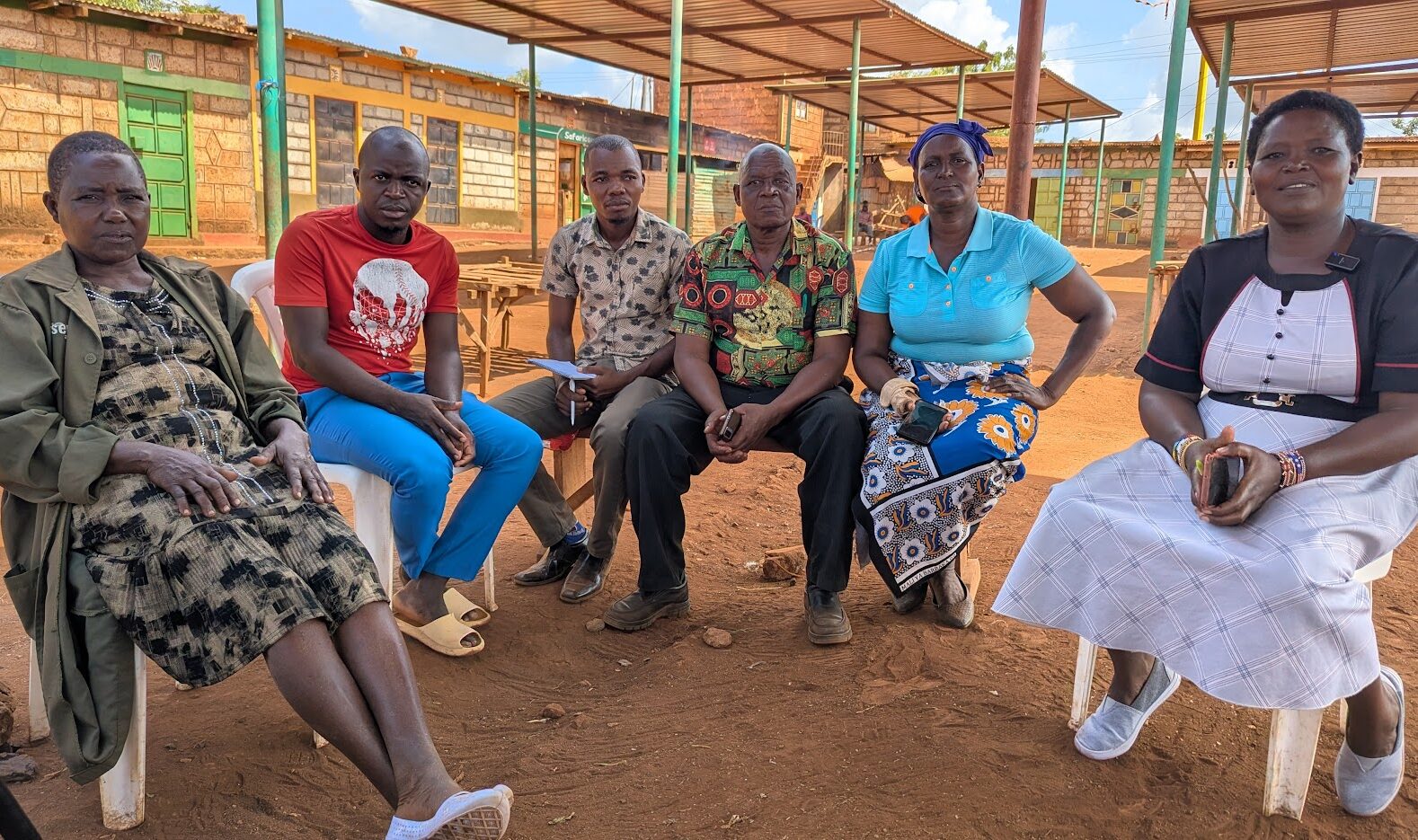
CAA thanks the PAFID team for introducing us to Janice Kabeti, who kindly welcomed us with neighbouring farmers to share their stories. This initiative is implemented by Alinea International, Econoler and WSP with funding from Global Affairs Canada.